
Why counterfeit IC checks matter before payment #
Counterfeit IC risk does not only mean a completely fake chip. In open-market sourcing, the risk may be a used pull sold as new, a refurbished device, a remarked lower-grade part, an engineering sample sold as production stock, a reballed BGA, or a mixed lot with weak traceability.
The practical goal is not to prove every part in a photo is genuine. The goal is to find inconsistencies early enough to pause the RFQ, request more evidence, change source, or add inspection before money and production schedule are at risk.
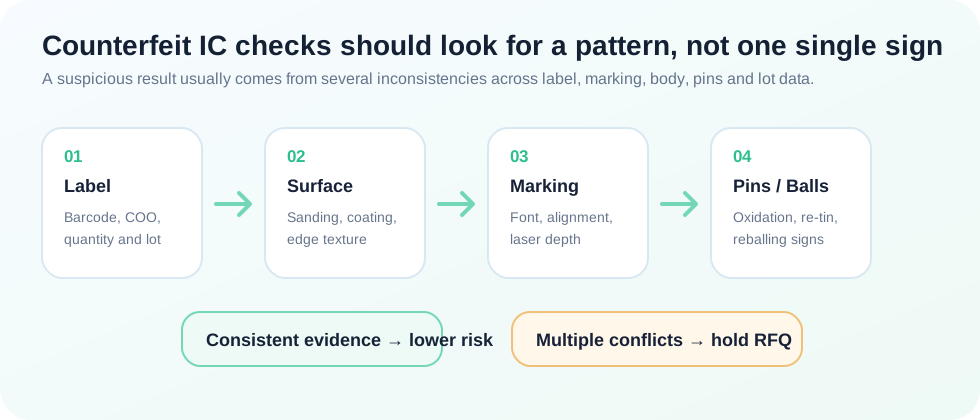
Start with the label and packaging #
Packaging is the first place to check because it connects the part to a lot, quantity, date code and source trail. A clean chip photo is useful, but it is not enough for production sourcing.
Ask for label photos before approving high-value or shortage stock. Check whether the manufacturer name, part number, quantity, date code, country of origin, lot information and barcode format make sense together. If the outer label, inner label and reel or tray information conflict, treat the offer as a risk item.
For factory-sealed material, confirm the seal is intact. For opened original packaging, confirm what was opened, when it was opened and how the remaining material was stored. For loose stock, ask why the original packing is missing.
Inspect the package surface #
Many refurbished ICs are cleaned or sanded to remove old marking, scratches, oxidation or soldering evidence. After that, a new coating or new marking may be applied.
Look for surface texture that does not match normal molded plastic. Warning signs include unusual gloss, visible sanding lines, uneven coating, a surface that looks painted, or package edges that look too sharp after material removal.
No single surface detail proves a part is counterfeit. The decision should come from the full pattern: surface, marking, leads, date code, package edge and label should tell the same story.
Check the marking, font and date code #
Modern IC marking is often laser-marked, but fonts and factory marks vary by manufacturer, package and production site. A suspicious marking may have uneven depth, crooked alignment, strange spacing, inconsistent line thickness or a date code that does not match the visible condition of the part.
For high-value parts, compare multiple pieces from the same lot. If the marking position, character weight or logo quality varies too much inside one lot, ask for a deeper inspection. If a date code looks new but the pins or package body look heavily handled, do not ignore the conflict.
Look at pins, leads and solder balls #
Pins and solder balls often reveal handling history better than the top marking. Leaded packages may show oxidation, scratches, uneven tin, flux residue, bent leads or re-tinning marks. BGA parts may show irregular ball size, uneven ball finish, contamination or evidence of reballing.
For DIP, SOP, QFP and TSSOP packages, check lead straightness and coplanarity. For QFN and DFN packages, check the exposed pad and edge pads. For BGA and FBGA packages, consider X-ray or professional inspection when the unit value or project risk is high.
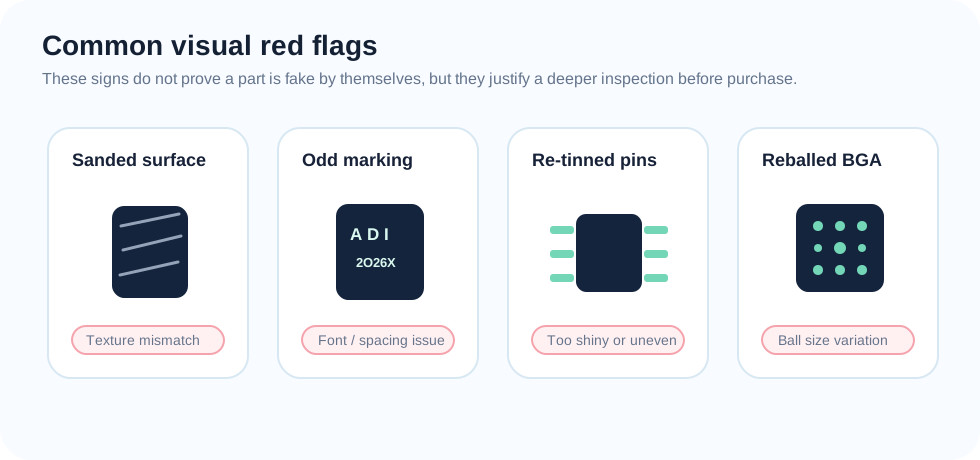
Compare the part against the buying context #
Counterfeit risk is higher when the market situation creates pressure: long lead time, urgent demand, obsolete status, allocation, high unit price, or a part number used in aerospace, medical, automotive, telecom or AI infrastructure projects.
A low price is not automatically wrong, but a quotation far below market level needs an explanation. The explanation should be evidence, not just wording. Ask for source background, label photos, package photos, date code, quantity split and whether the lot is factory-sealed, opened original package or bulk stock.
Practical red flags before purchase #
| Red flag | What it may indicate | Buyer response |
|---|---|---|
| Label and chip marking conflict | Mixed lot, repackaging or wrong material | Request more photos and hold order |
| Surface looks sanded or coated | Refurbished or remarked risk | Ask for inspection or reject source |
| Pins are too shiny or uneven | Re-tinning or prior use | Check under magnification |
| BGA balls are inconsistent | Reballing or recovered stock | Consider X-ray inspection |
| Date code looks too new for stock condition | Remarking or mixed inventory | Verify lot and source trail |
| Price is far below market | Risk stock, wrong suffix or weak traceability | Compare with other offers before payment |
RFQ checklist for anti-counterfeit control #
- Send the full manufacturer part number, not only the base number.
- State whether factory-sealed material is required.
- Define acceptable date code and lot split before quotation.
- Ask for label, reel/tray/tube, top marking and package-condition photos.
- Confirm package, suffix, temperature grade and packing format.
- For BGA, FBGA, FPGA, processor, memory and high-value parts, decide whether
X-ray or third-party inspection is required.
- Do not approve a substitute suffix without engineering confirmation.
What to do if something looks suspicious #
Do not argue from one photo alone. Ask for missing evidence and compare the full story. If the supplier cannot explain the source, package condition, date code or label conflict, treat the risk as real.
For low-value non-critical parts, the buyer may choose a different source. For high-value or production-critical parts, the safer path is to pause the RFQ, request inspection, change supplier or require traceable stock.
Procurement takeaway #
Counterfeit IC control starts before payment. The best time to find risk is when the supplier can still provide photos, documents and explanations. Once material is received, rejected, reworked or mounted on boards, the cost of a bad decision is much higher.
Use a simple rule: label, marking, surface, pins, package and date code should support the same story. If they do not, slow down the purchase.
Need stock, date-code or package confirmation?
Send the part number, quantity, target date code and packaging requirements. LimChip will check available lots and RFQ details before you place the order.
Send RFQ